
March 2026

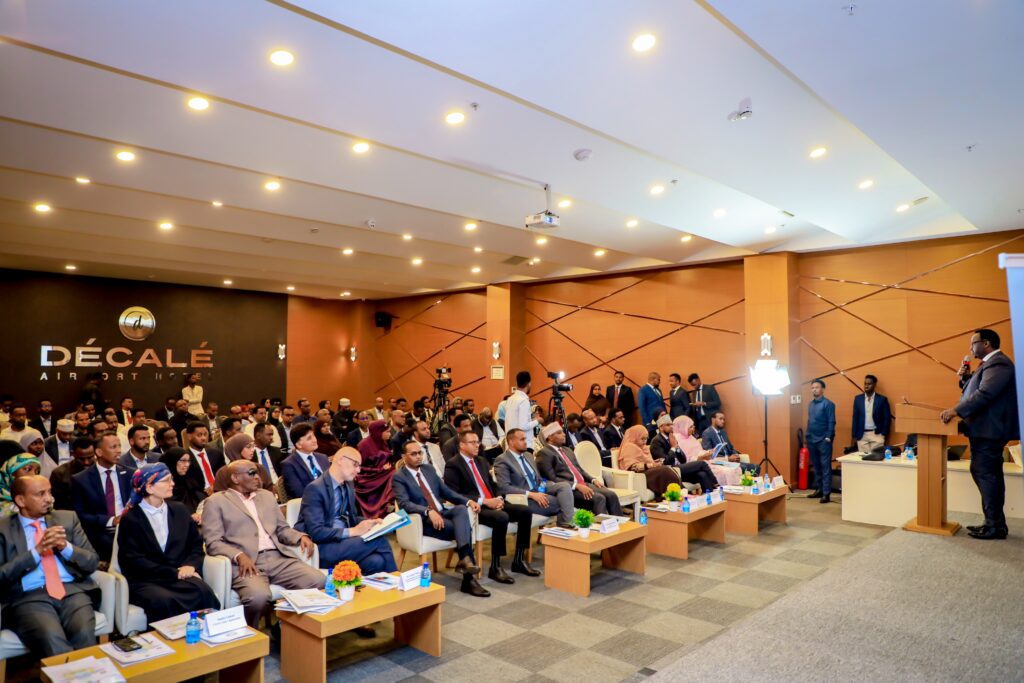
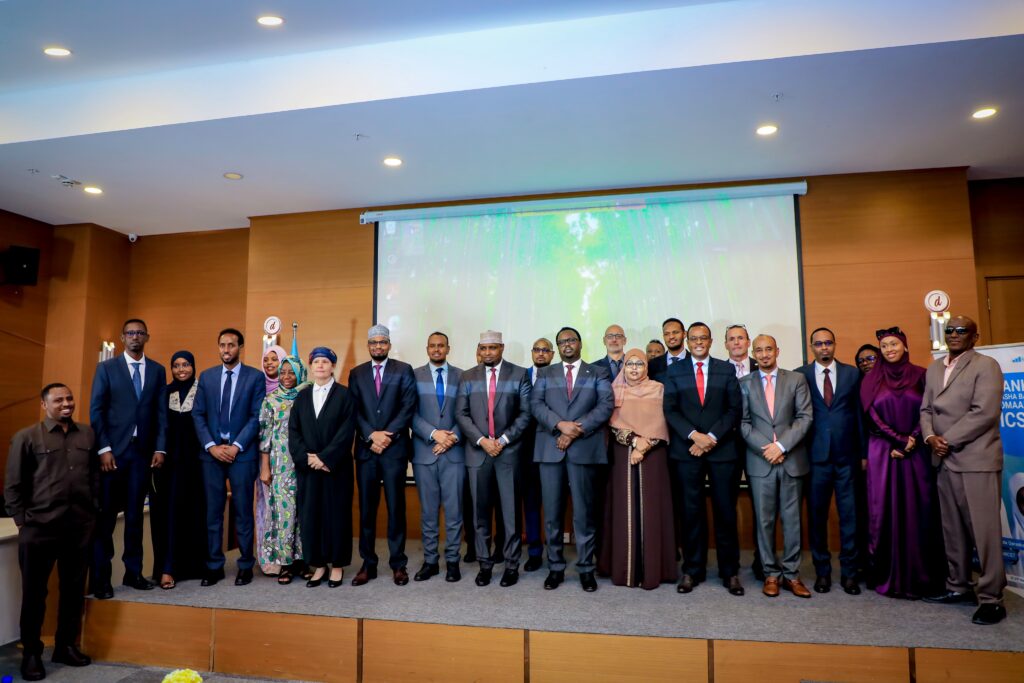
SNBS Launched The Commencement of the MICS-7 Survey

SNBS launched the commencement of the MICS-7 Survey in a high-level event unveiled by H.E. Salah Ahmed Jama, Deputy Prime Minister of Somalia. The hybrid event brought together Federal & Federal Member State Ministers, including the Minister of Planning & the Minister of Labor, senior government officials, representatives from UN, World Bank, UNICEF, WHO, civil society, academia & the media.

In his opening Address, the Deputy Prime Minister stressed the centrality of data for national transformation: “If a Somali child is healthy & educated, s/he embodies human capital—the true wealth of a nation. MICS-7 will provide the indicators needed to craft Somalia’s National Human Capital Development Strategy.” He further called on all relevant ministries to ensure that the data generated from the survey is used for prudent & requisite policy interventions that directly improve the lives of Somali citizens.

SNBS Director General, Dr. Abdisalam Mohamed, underlined the importance of the survey for policymaking: “Without credible data, policy remains guesswork; with it, policy becomes precision. MICS-7 is a collective investment in knowledge, accountability & shared future of every Somali child, woman & family.” He further noted the survey will cover 17 of the 18 pre-war regions.

Delivering the closing remarks, H.E. Mohamud Abdirahman Sheikh Farah (Beenebene), Minister of Planning Investment & Economic Dev. reaffirmed government ownership of the process, noting, “this survey marks a new chapter in evidence-based policy. It will guide our efforts to build a resilient, equitable & prosperous Somalia.”

SNBS extends deep appreciation to development partners—World Bank, UNICEF & WHO—for their technical partnership & support in making this landmark survey possible. With 168 indicators & 47 SDG measures, the majority focused on human capital, MICS-7 signals a new era for Somalia’s data-driven development.
SNBS Launched The Commencement of the MICS-7 Survey Read More »

Annual Performance Newsletter – 2025

A Year of Institutional Transformation

The year 2025 stands as a defining milestone in the institutional evolution of the Somalia National Bureau of Statistics and the broader National Statistical System. As Somalia advances implementation of the National Transformation Plan (2025–2029) and lays strategic foundations for Vision 2060, the demand for credible, timely and internationally harmonized statistics has assumed unprecedented importance.

In an increasingly complex development landscape, official statistics are no longer peripheral technical outputs but strategic national imperatives. Official statistics inform macroeconomic management, underpin fiscal planning, guide social investment, strengthen governance accountability and enable Somalia to report authoritatively on its national priorities and global commitments, including the Sustainable Development Goals.

Annual Performance Newsletter – 2025 Read More »

Somalia’s Inflation Outlook: Intersections of Global Oil Shocks, Import Dependence, and Climate Crises

Somalia is currently navigating a severe and multifaceted macroeconomic shock, characterized by a sharp, sudden rise in inflation. This inflationary environment is not the result of a single variable, but rather a complex confluence of global geopolitical shocks, domestic supply-side constraints, and the country’s structural dependence on imports. The unexpected escalation of the Iran conflict in late February 2026 served as the primary catalyst, triggering an immediate and aggressive spike in global oil prices. Given the interconnected nature of global energy markets and maritime logistics, this shock rapidly transmitted into the Somali economy. Within a matter of days, domestic fuel prices in Mogadishu surged by over 100%, climbing from $0.60 to $1.50 per litre. This energy shock has created widespread, aggressive cost-push inflation across all criticalsectors, most notably in transport, food distribution, and imported consumer goods.

Somalia’s Inflation Outlook: Intersections of Global Oil Shocks, Import Dependence, and Climate Crises Read More »

Scroll to Top